

Light Manifesto
Mechanical software is dead. Long live organic software.
Book a demoFor fifty years we built software like machines: fixed parts, fixed answers. You set it up once, and every time the business changed, you filed a change request.
It was the only kind of software we knew how to build. Mechanical software can count, but it cannot read. It can execute a rule, but it cannot learn one. So the gap between what the software did and what the company actually needed was quietly filled by people: implementation consultants, spreadsheet exports, and a finance team doing by hand the work the system was supposed to do. That era is ending. The software replacing it is not a better machine. It is closer to an organism. It learns, it adapts, it heals, and it grows with the company it serves.
The mechanical era
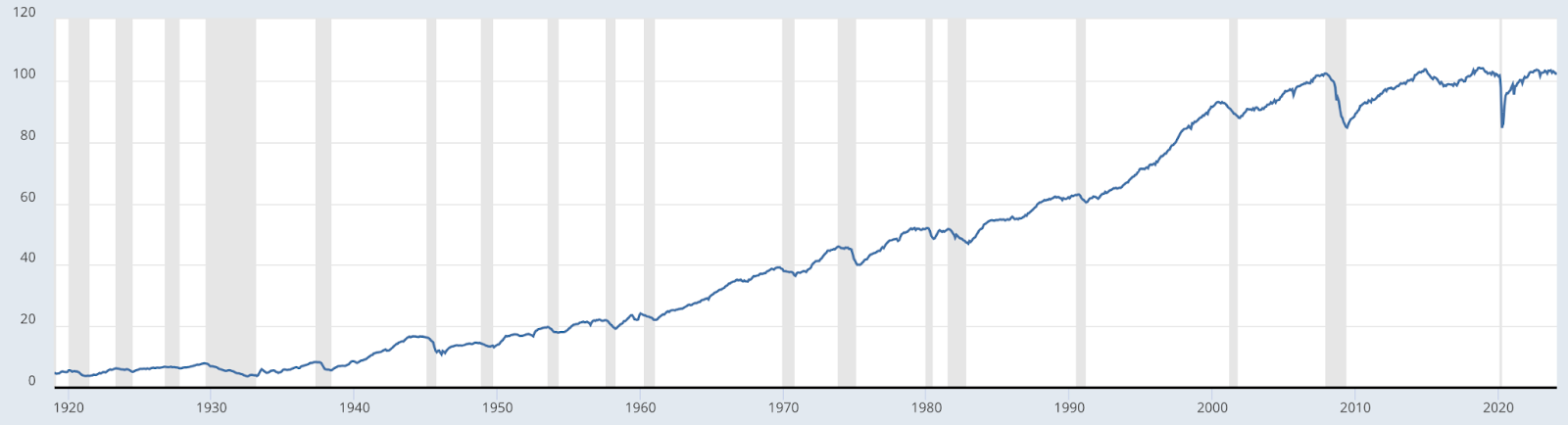
The ERP was mechanical thinking in its purest form. Model the factory, model the flow of materials from raw input to finished output, and hard-code the path between them. It was built for the secondary sector of the economy, back when industrial output was growing rapidly from the end of the Second World War onward, and for that world it was a genuine achievement. An automobile manufacturer really did need one place to plan every shift, every part, and every sale.
Machines are wonderful at repetition and terrible at surprise. So the ERP came with an operating manual for surprise: the implementation project, the consultant, the change request, the upgrade window. Nothing about the software could change by itself, because nothing about a machine ever does. Every adaptation had to be performed on it, from the outside, by someone billing for the privilege.
The patching that followed is well known. Salesforce carved out CRM. Workday carved out HR. What remained was a husk, and hundreds of point solutions grew over it: Accounts Receivable, Accounts Payable, FP&A, procurement, expense management, close management. Billions of dollars later, finance teams were running ten systems and owning none of their data.
Organic software
Something changed underneath us. Software can now read, infer, and generalise, which means it can finally do the thing machines never could: get better at its job without being rebuilt. That is what we mean by organic software, and it has three properties a machine cannot fake.
It learns. Every correction is training. When a controller recodes an invoice, adjusts an accrual, or overrides a match, the system takes that as instruction rather than as an exception to be logged. The hundredth invoice from a supplier should not need the same attention as the first. In mechanical software it always did, because the machine had no memory of you, only a rules table someone had to maintain.
It adapts. A new entity, a new currency, a new jurisdiction, a filing requirement that changed in March: an organism responds to its environment. Organic software reshapes itself around the business as it is today, not as it was on the day of the kickoff meeting. Growth stops being a project with a budget and a fifteen-month runway, and becomes something the software simply absorbs.
It heals. Living systems spend most of their energy on repair. Financial operations are full of small injuries: a duplicate invoice, a broken bank match, a balance that drifts, a mapping that silently stops fitting. Mechanical software's answer is to stop and wait for a human. Organic software's answer is to notice, repair what it can, and bring a person only what genuinely needs judgement. The close should not be the moment you discover what has been quietly broken since the twelfth.
Numbers were only ever half of finance
Accounting is not a numeric discipline that occasionally involves documents. It is a discipline of judgement, and its evidence is text: the contract, the invoice, the email confirming a discount, the policy that says what may be expensed, the note explaining a provision, the reasoning behind a treatment. The ledger holds the conclusions. The text holds the reasons.
Mechanical software could only hold the conclusions. Text went into an attachment field and out of the system's reach, so the reasoning stayed in people's heads and in email threads, which is why every audit, every review, and every handover begins with an archaeological dig. Numbers separated from their reasons are why so much finance work gets done twice.
Organic software marries the two. When the same system reads the contract and posts the entry, a figure can explain itself in words and a sentence can be traced to the entries that support it. Ask why gross margin moved and get an answer about pricing and supplier terms, with the transactions attached. A report becomes a memo with the ledger underneath it, and the audit trail starts answering why rather than only what.
To everyone who builds finance
There is a myth that finance teams merely operate systems while engineers build them. Anyone who has worked in finance knows better. The controller who built a group consolidation that actually ties. The bookkeeper who carries a coding policy in their head with more nuance than any rules engine. The analyst whose model became the way the company understands itself. The accountant who scripted a reconciliation over a weekend because the vendor quoted six months. These are builders, and the mechanical era called them end users and told them to wait for the next release.
Organic software hands them the pen. When the system takes instruction in plain language and learns from how the work is actually done, shaping it stops being a technical act. It becomes the act of doing your job well, and the software keeps what you taught it. Finance people become power users who build automations, workflows, and controls without being technical, and without a queue.
That is who we are building for: everyone who builds finance, in every company, whether or not they have ever called themselves a builder.
What we are building
Light is our attempt at organic software for financial operations: an AI-native platform for multinational businesses, with automated multi-currency bookkeeping, real-time reporting, and AI-powered pre-accounting on one integrated ledger. Agents do the repetitive work of accounts payable, receivable, and reconciliation, and get better at it as they go. Text and numbers live in the same place, so the system can explain itself. And we do the sale, the installation, and the support ourselves, because handing those to a third party is how the mechanical era made software someone else's problem.
International expansion should not require a $250,000 budget and a fifteen-month implementation. It should require telling your finance platform that you have opened in Spain.
Mechanical software is dead. Long live organic software.
platform
Finance software that grows with you
One platform that learns your business, adapts as it changes, and keeps the reasons beside the numbers.
Learns from you
Every correction teaches the system. Coding, matching, and approvals sharpen as you work.
Adapts as you grow
New entity, new currency, new rules, absorbed by the platform instead of filed as a change request.
Self-healing
Duplicates, broken matches, and drifting balances get found and repaired before the close.
Text and numbers
Contracts, invoices, and threads sit beside the ledger, so every figure can explain itself.
Built by finance
Automations, workflows, and configurations your finance team builds without being technical.
Integrated ledger
A single source of truth for global finance data, and up to 100x faster than NetSuite.
We are building organic software for the people who build finance. That is the whole of it.
Jonathan Sanders · Co-founder & CEO